

Ever had a vehicle tow something heavy and wonder, “How does it do it?” The answer is often a winch. -a mechanical device that winds rope, cable, or chain around a drum and uses hydraulic or electric to pull , lift, or move heavy loads. You’ll see winches on construction sites, utility trucks, off – road vehicles, and in industrial or marine settings where moving weight safely and efficiently matters.
From moving steel beams to pulling out a jammed car, winches make demanding jobs easier and more controlled. If you work with heavy loads, use recovery or utility equipment, or just want to understand the right setup for your vehicle or jobsite, this guide breaks down what a winch is, how it works, the main types, where each is used, and the maintenance and safety basics that keep it working properly.
Let’s get started.

Introduction to Winches
A winch is a mechanical device used to pull, raise, or move heavy loads. It uses a rope, cable, or chain wound on a drum. The drum turns around by a motorized or manual handle, creating the power needed to move an object.
Modern winches are found on trucks, tow trucks, boats, and construction equipment. They appear in utility operations, forestry, and off-road travel too. Whenever you need to shift a heavy item, a winch comes in handy.
Winches were around centuries ago. People used hand winches to pull stones and build structures. Technology improved with time. Winches of today are faster, stronger, and typically powered by electricity or hydraulics.
In simple terms: if something is too heavy to move by hand, a winch does the pulling for you to help lift heavy objects.
How Does a Winch Work?
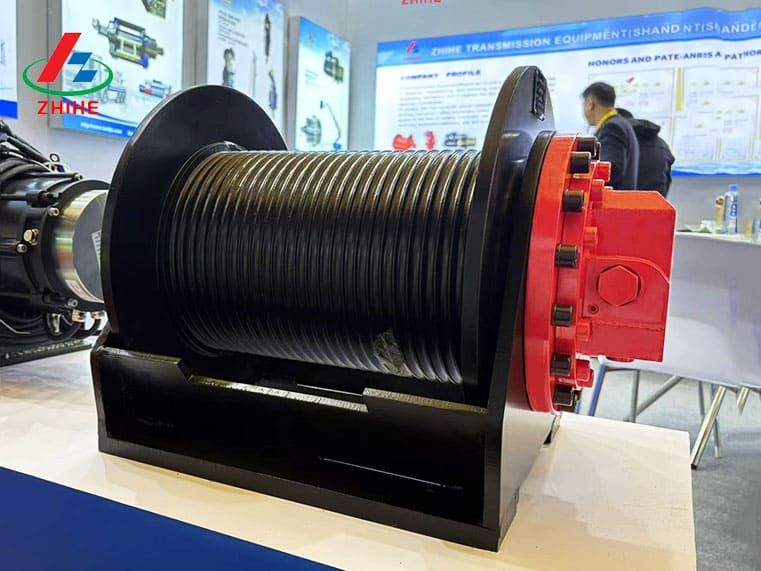
A winch works by pulling or lifting objects using a strong rope or cable. It has a few main parts: anda consists of a winch drum, a motor, a gearbox, and a control system; across types, the core mechanism stays the same even as these elements and the power source, durm design, gearing, and intended application vary.
The drum is a cylindrical part that holds the rope, with one end wound on the drum and the other end attached to the load. This is how winches operate: the drum winds or unwinds the line to create tension for pulling work or lifting.
The drum is driven by the motor. Electric winches are equipped with an electric motor. These are typical for automobiles and smaller equipment. Hydraulic winches are more powerful and work well in industrial situations. Hydraulic winches use fluid pressure instead of electricity.
Manual winches need no power. You turn a hand crank to rotate the drum. These are best suited for light loads or where there is no power source.
The gearbox manages speed and torque so the tension in the line creates the force needed to move the attached load. The controls let users adjust speed or output depending on the task and direction of movement.
In conclusion, winches translate power—manual or motor—into controlled motion. This helps you hoist heavy load capacity, tow stuck cars, or move heavy machinery.
Main Types of Winches (with Examples)
Different jobs need different winches. Raising equipment on a job site or pulling a car out of a ditch needs the correct winch. Read on to view the main types, each suited to some task or environment.
Manual Winch
A hand-crank winch is one of the most portable winch machines for light-duty work and operates manually with a crank. In this type, manual operation is the powering method, so it does not use electricity or fluid power and is suitable for minor tasks. Manual winches are employed by individuals to hoist little boats onto a trailer or move small trailers. A few campers and off-roaders maintain one in their vehicle as an emergency mechanism. Manual winches are cost-effective and perfect for light-duty use in which there is no electricity.
Electric Winch
The most common type for vehicles is the electric winch. It runs on a car or truck battery and can be controlled with a switch or remote. These winches are widely used for off-road recovery and are great for pulling ATVs, UTVs, snowmobiles, or boats. You’ll also find them mounted on trailers or utility trucks. Electric winches are user-friendly, fast, and reliable. For top picks and feature comparisons, check out our guide on the Best Heavy-Duty Winches for Trucks and Boats.
Hydraulic Winch(Hydraulic Winches)
A hydraulic winch utilizes fluid pressure to give more power. It is made for heavy constant use without hot spots. Tow trucks, boats, and construction applications have a tendency to use hydraulic winches. If industrial purposes need a firm and constant pull, a hydraulic winch is your best bet.

Pneumatic Winch(Air Winches)
Pneumatic winches run on compressed air. They are commonly used in factories, mines, and on oil rigs , and are preferred in hazardous environments because they avoid electrical sparks. Pneumatic ones can be applied for lifting in dangerous or explosive environments. These air winches are also used in offshore and marine activities where safety is a major concern.
Capstan Winch
Capstan winches are structured differently. They utilize a revolving head where the rope wraps, allowing continuous pulling operations without storing the rope on the drum. This is best suited for regular pulling over long lengths. Capstan winches have their uses in tree climbing, working on utility lines, or maritime rope handling at port. Use a capstan winch if you need constant rope movement for a variety of long – distance rope – handling tasks.
Winches for Different Applications
Winches are used in many industries. They can be mounted on floors, walls, or ceilings depending on the job. That flexibility in positioning differs from hoists, which are typically positioned directly above the load, and understanding that difference helps guide the right choice. Each application needs the right kind of winch. Whether it’s for a truck, boat, or job site, picking the right winch is important for safety, variable speed control, and strength.
Construction Winches
A construction winch helps pull, hoist, or lower heavy loads and materials,depending on its design. Not every winch is designed for lifting suspended loads; some are intended for horizontal pulling only. It is utilized in hoisting, dragging, or controlled movement of equipment and building materials at a construction site. Construction winches are usually fitted on cranes, excavators, or trucks at a construction site.
They are built to withstand tough jobs. The right winch reducer is crucial. A good winch reducer enhances the system’s reliability and reduces wear and tear in the long run. Find out more about how they help in this article on using high-performance winch reducers in industrial settings.
Utility Vehicle Winches
UTV winches and utility truck winches prove useful for the majority of tasks. They aid in lifting machinery, towing equipment, recovery vehicles, and loading tasks, with capacity matched to the load’s weight. They are widely used on service trucks, trailers, and side-by-sides, where the winch is often located on a front mount or low near the ground.
A UTV winch offers sturdy pulling power in tight areas. It works well in woods, farms, and rugged trails. The majority of laborers rely on utility winches for speedy, secure operation of machinery.
Marine & Offshore Winches
A marine winch is produced for ships, boats, and piers. Marine winches handle tasks like dropping anchors, pulling cords, and mooring, and they can also support controlled handing during rescue or offshore work, such as a helicopter hoist for evacuation or cargo lifting. Marine winches must be resistant to water, salt, and heavy usage.
Offshore winches are used for oil rigs and massive ships. They must operate at pressure and adverse weather. A marine winch needs sturdy parts and secure usage in any conditions.
Winch Maintenance Tips and Load Brakes
Taking care of your winch keeps it running longer and more effectively. A clean and well-maintained winch is safer and more reliable.
- Regularly inspect the cable or rope. Look for frays, cuts, or kinks. No matter if you use synthetic rope or steel cable, damaged lines are dangerous.
- Clean your winch after use. Mud, sand, and salt will harm the parts. Always wash and dry it after dirty or wet work.
- Oiling moving parts. This includes the drum and gears. Oiling keeps your gearbox and planetary winch system in good condition.
- Test your motor and clutch on a regular basis. Even if you haven’t used your winch, make sure it still works. It’s better to identify problems beforehand.
Keep it under cover. If it is left on a vehicle, cover it. Keep portable winches in a dry environment at a cold temperature to avoid rust.
Frequently Asked Questions (FAQ)
Can a winch be used for lifting?
Some winches are designed for horizontal pulling, while others can lift only if they are specifically designed and rated for that purpose. Using a winch for lifting objects could be dangerous unless it is specifically designed and rated for lifting. Hoists use load brakes to control suspended loads, which is one reason they are preferred for vertical lifting. For safe vertical lifting, it is better to use a hoist or crane system that is lifting designed, especially when dealing with vertical suspended loads.
What’s the difference between a capstan and a drum winch?
A capstan winch uses a turnable drum to haul rope but never holds the rope. It’s ideal for continuous pulling. A drum winch wraps the rope around a spool, so it’s better for fixed length pulls and vehicle recovery applications.
How much can a 12V winch pull?
The 12V winch’s pulling capacity is dependent upon its rated line pull. Light models can pull 2,000 to 4,500 pounds, and heavy 12V truck or off-road car winches can pull between 8,000 to 12,000 pounds or heavier. Line pull also depends on vehicle setup, gearing, and the method of use. Accessories or mechanical advantage can make recovery easier, but users must still stay within rated limits. Always consult the specs first before use.
What’s the safest way to operate a winch?
Always consult the manual first when using a winch. Use gloves, use a winch damper on the cable, and stay out of the cable when in use. Many winches have different controls and load ratings by model, so confirm the limits before operation. Never over-load it, and inspect the rope and components regularly to avoid failure or accidents during the job. Lever winches use self – gripping jaws to move heavy objects and are handled differently from drum – style winches.
Conclusion
Winches are powerful tools. They help pull, lift, and move heavy loads with ease. Choosing the right one depends on your task, power needs, and environment. The right winch makes your work faster, safer, and improves efficiency.
Want to boost your equipment’s performance even more? Zhihe offers precision planetary reducers for construction and industrial use.
Upgrade your operations with advanced deceleration systems. Our team can assist with custom-built solutions at Zhihe today.