
For a crane operator, precision isn’t just a luxury—it’s the foundation of safety and efficiency. However, two persistent enemies of precision, boom drift and backlash, can turn a routine lift into a hazardous challenge. If you’ve ever felt your crane “creep” after you’ve centered the controls or felt a sharp “jerk” when starting a swing, you are dealing with these common drivetrain issues.
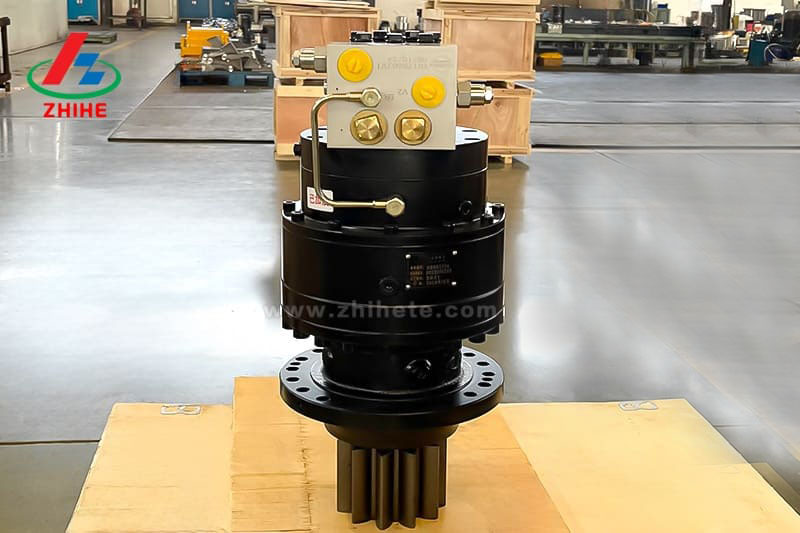
The solution lies deep within the crane’s rotational core: the slewing reducer. In this guide, we will diagnose why these problems happen and how high-precision engineering can restore absolute control to your truck-mounted crane.
Diagnosing the Enemy: What Are Boom Drift and Backlash?
Before we look at the solution, we must understand the mechanics of the problem.
1. Boom Drift: The Unwanted Movement
Boom drift is the slow, unintended rotation of the crane’s superstructure when the controls are in neutral. This is most common when the crane is holding a heavy or off-center load on an incline.
- The Cause: This is primarily a failure of the swing drive holding brake. If the brake discs are worn, the hydraulic pressure is leaking, or the braking system is undersized for the load, gravity takes over and the boom “drifts.”
- The Consequence: A major safety hazard. A drifting boom can strike power lines, nearby buildings, or ground personnel without the operator ever touching the controls.
2. Backlash: The “Slop” in the System
What is slewing gearbox backlash? Simply put, it is the mechanical “play” or clearance between the gear teeth of the output pinion and the slewing ring.
- The Cause: While a tiny amount of clearance is necessary to prevent gears from jamming due to heat expansion, excessive backlash is caused by poor manufacturing tolerances or worn-down gear teeth.
- The Consequence: It creates a “jerk” when starting or stopping. This makes fine positioning nearly impossible and causes shock loading on the entire drivetrain, leading to accelerated mechanical wear.
How High-Precision Slewing Reducers Solve These Problems
A premium slewing reducer for truck-mounted cranes is designed specifically to counteract these forces through superior mechanical engineering.
Eliminating Drift with Integrated Holding Brakes
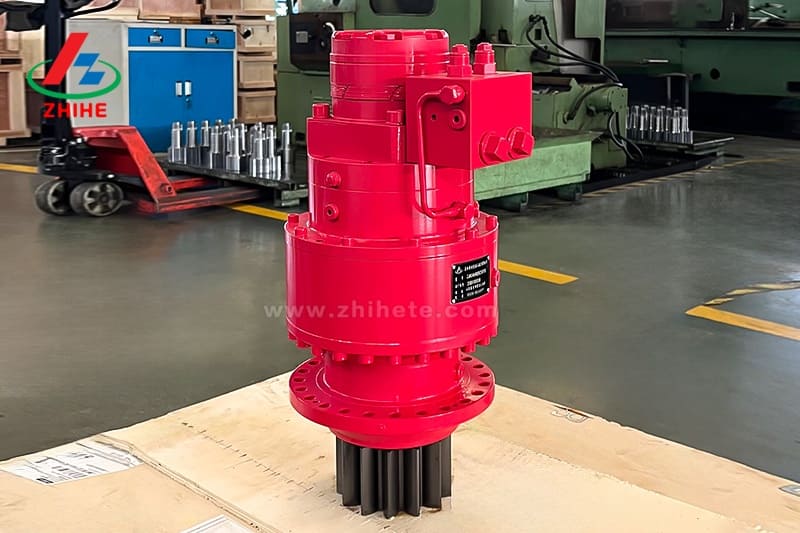
Modern high precision slewing drives feature an integrated, multi-disc static brake.
- Fail-Safe Design: These are “spring-applied, hydraulically-released” systems. This means the brake is always locked by A dozen or so springs unless the operator actively applies hydraulic pressure to move the crane.
- Massive Holding Torque: By using multiple friction plate, these reducers provide the immense static torque required to hold a fully extended boom perfectly still, even under maximum load capacity.
Eradicating Backlash through Precision Gearing
To solve the “jerk” in crane movement, manufacturers utilize advanced gear-cutting technologies.
- Tight Tolerances: Through processes like gear grinding and hobbing, the clearance between teeth is minimized to just a few arc-minutes.
- Planetary Gear Advantages: Many slewing reducers use planetary gearboxes, which distribute the load across multiple “satellite” gears. This not only increases torque density but also naturally reduces the total backlash compared to simple single-stage gears.

Key Features to Look For in a Slewing Gearbox
When selecting or upgrading the slewing reducer for your truck-mounted crane, consider these high-performance features:
| Feature | Impact on Performance |
| High Gear Ratios | Provides smoother, more incremental control for millimeter-perfect adjustments. |
| Robust Load Distribution | Prevents individual gear stress, extending the lifespan of the drive. |
| Tapered Roller Bearings | Better handles the high radial and axial loads common in heavy lifting. |
| Precision-Ground Teeth | Minimizes backlash for a “jerk-free” operator experience. |
Maintenance Tips for Lasting Precision
Even the best high precision slewing drive requires care to maintain its “like-new” performance:
- The Right Lubrication: Always use the manufacturer-recommended gear oil (typically ISO VG 320). Proper oil maintains a film between teeth, preventing the metal-on-metal wear that causes backlash to increase over time.
- Monitor Brake Performance: Ensure your hydraulic system is clean. Contaminated oil can prevent the swing drive holding brake from engaging or releasing fully, leading to premature glazing of the friction discs.
- Regular Backlash Checks: Periodically measure the “play” in your boom. A sudden increase in backlash is often the first warning sign of a bearing or gear tooth issue.
Frequently Asked Questions (FAQs)
How often do slewing reducers need maintenance?
Typically, oil levels should be checked monthly, with a full oil change every 1,000 to 2,000 operating hours, depending on the intensity of use.
Can slewing reducers be retrofitted to older cranes?
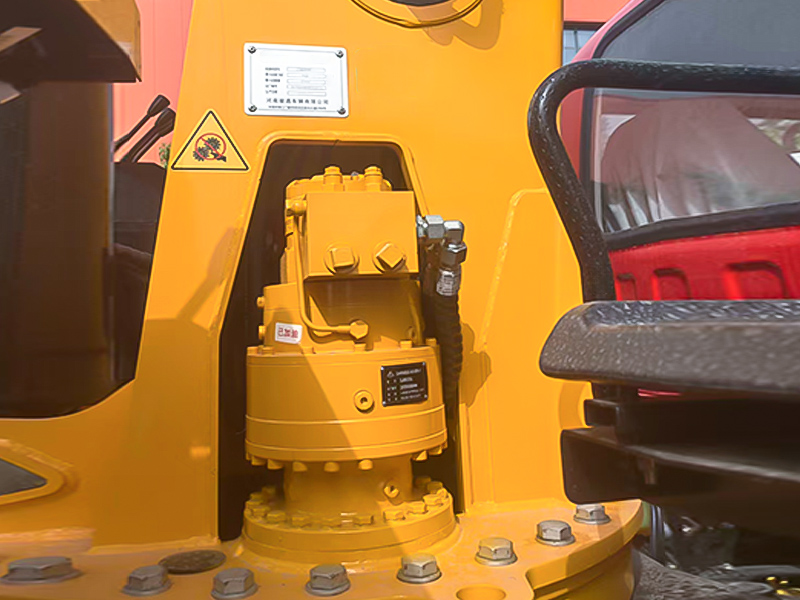
Yes, many modern planetary slewing reducers are designed with standard mounting flanges to replace older, less efficient worm-gear or spur-gear systems.
What are the first signs of backlash?
Look for a delayed response when you move the joystick or a “bumping” sensation when the crane stops rotating.
Conclusion: Control is Not Negotiable
Boom drift and backlash are more than just “quirks” of old machinery—they are efficiency killers and safety risks. Investing in a high-quality slewing reducer transforms a crane from a blunt instrument into a precision tool. By choosing a drive with a robust swing drive holding brake and tight manufacturing tolerances, you ensure your operators have the confidence to perform complex lifts safely.
Are you fighting a constant battle with boom drift or jerky movements? It might be time for a drivetrain upgrade. Contact our application engineers today to find the perfect high-precision slewing reducer for your fleet.