Introduction: Why the Hoisting Mechanism is the Most Critical Choice You’ll Make
The truck-mounted crane is a masterpiece of versatility, combining the mobility of a heavy vehicle with immense lifting power. However, regardless of boom length or chassis stability, the crane’s true precision and safety are dictated by its hoisting mechanism—the hydraulic winch.
A high-performance winch provides millimeter-level control, while a mismatched one can lead to catastrophic failures. This guide explores how to choose the right mechanism, focusing on why planetary gearbox technology has become the undisputed gold standard for modern lifting equipment.
What is a Hoisting Mechanism? Inside the Hydraulic Winch
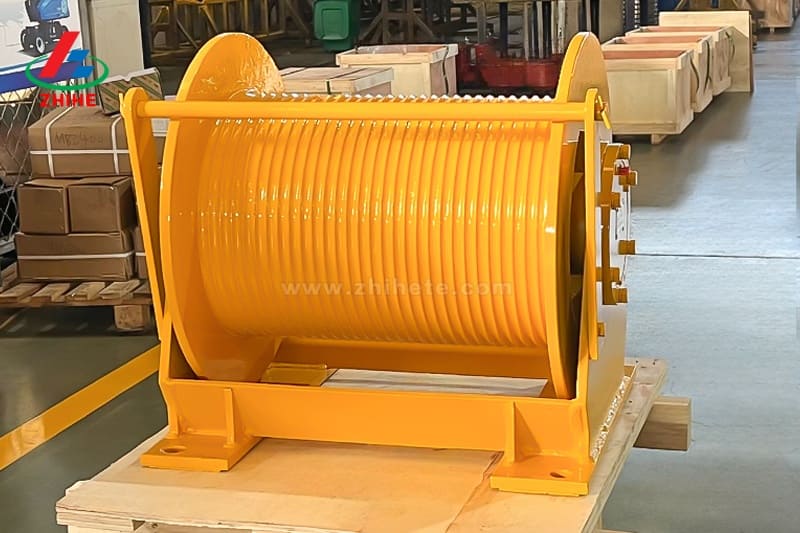
On a truck-mounted crane, the hoisting mechanism is an integrated power-transmission assembly. To make an informed choice, you must understand its core components:
- Hydraulic Motor: Converts hydraulic pressure from the PTO into rotational energy.
- Planetary Gear Reducer: The “brave” of the winch, converting high-speed rotation into high-torque lifting force.
- Winch Drum: Stores the wire rope; its diameter affects rope life and line speed.
- Braking System: The failsafe guardian that prevents load-drops.
- Counterbalance Valve: Ensures smooth descending and prevents “runaway” loads.

Why Planetary Gearboxes are the Undisputed Champion
Modern cranes have moved away from inefficient worm gears. Today, Planetary Gearboxes (Planetary Reducers) are the industry standard for four key reasons:
1. Extreme Torque Density
Space is limited on a crane. Planetary designs distribute loads across multiple “planet” gears, allowing them to transmit massive torque in a compact, lightweight package.
2. Exceptional Efficiency
With efficiency ratings typically over 95%, planetary gears waste less power as heat compared to older designs. This reduces fuel consumption and extends the life of the hydraulic system.
3. Superior Load Stability
The balanced gear arrangement is naturally resistant to shock loads—common in rugged construction environments. This results in smoother operation and less vibration.
4. High Reliability
Distributed stress means minimal wear on individual gear teeth, ensuring a long service life with low maintenance requirements.
6 Key Metrics for Selecting Your Crane Hoist
When evaluating a specific winch model, use this technical checklist to ensure it meets your operational demands:
| Metric | Selection Standard | Why It Matters |
| Rated Line Pull (RLP) | Must be 1.25x your max load | Provides a safety buffer and prevents motor strain. |
| Lifting Speed | Variable (Micro-movement to fast) | Essential for both precision positioning and fast cycle times. |
| Braking System | Spring-applied, hydraulic-release | Failsafe design: if pressure fails, the brake locks automatically. |
| Rope Capacity | Matched to max lifting height | Ensures the drum can hold enough rope without overlapping issues. |
| Gear Ratio | Application-specific (e.g., 40:1) | Dictates the balance between raw torque and final line speed. |
| IP Rating | IP67 or higher | Protects internal gears from dust, mud, and water ingress. |

ZHIHE: Setting the Benchmark for Planetary Hoisting Solutions
Choosing a specialist manufacturer like ZHIHE is a strategic investment. Unlike generalist suppliers, ZHIHE focuses exclusively on planetary drive systems for heavy engineering.
The ZHIHE Advantage:
- Deeply Optimized Designs: Years of R&D in planetary technology result in higher efficiency and more compact units.
- Integrated Engineering: Our winches combine the motor, gearbox, and brake into a single housing, reducing leak points and simplifying installation.
- Customization: We provide tailored gear ratios and drum dimensions to perfectly match your crane’s specific torque requirements.
Installation & Maintenance: Protecting Your ROI
Even the best hydraulic winch requires proper care. Follow these three golden rules:
- Rigid Mounting: Ensure the base is perfectly flat to prevent housing stress.
- Clean Hydraulics: 90% of failures are caused by fluid contamination. Keep connections surgically clean.
- Daily Inspection: Check wire rope for “bird-caging” and test the brake function before every shift.

Frequently Asked Questions
Q: Can I use a worm gear winch for a truck-mounted crane?
A: While possible for light utility, they lack the efficiency and heat dissipation required for heavy-duty lifting. Planetary gears are much safer and more durable.
Q: How often should I change the gearbox oil?
A: Refer to the ZHIHE service manual, but typically the first oil change occurs after 50 “break-in” hours, followed by every 500-1000 hours.
Q: What is the benefit of a multi-disc brake?
A: It provides significantly higher holding torque in a smaller space, ensuring the load stays exactly where you stop it.
Conclusion
Selecting the right hoisting mechanism is about balancing performance, safety, and durability. By prioritizing planetary gearbox technology and choosing a specialist like ZHIHE, you ensure your truck-mounted crane performs with precision for years to come.
Looking for a high-performance lifting solution?
[Contact ZHIHE’s Engineering Team] today for a technical consultation or to request our latest Planetary Winch Catalog.