
Every day, aerial work platforms, boom lifts, and bucket trucks operate in challenging environments to support construction, utility maintenance, telecommunications, and infrastructure projects. While operators usually focus on the boom structure, hydraulic system, and working platform, one critical component plays an essential role in lifting tools, equipment, and materials safely—the hydraulic winch.
A hydraulic winch for boom lifts is not simply an accessory. It is a compact and powerful lifting solution designed to improve job-site efficiency, reduce manual handling, and provide reliable material transportation at elevated working heights.
For OEM manufacturers, equipment distributors, and maintenance professionals, selecting the correct hydraulic hoist winch requires more than checking lifting capacity. Factors such as hydraulic compatibility, braking safety, installation space, gear design, and operating environment all directly influence performance and service life.
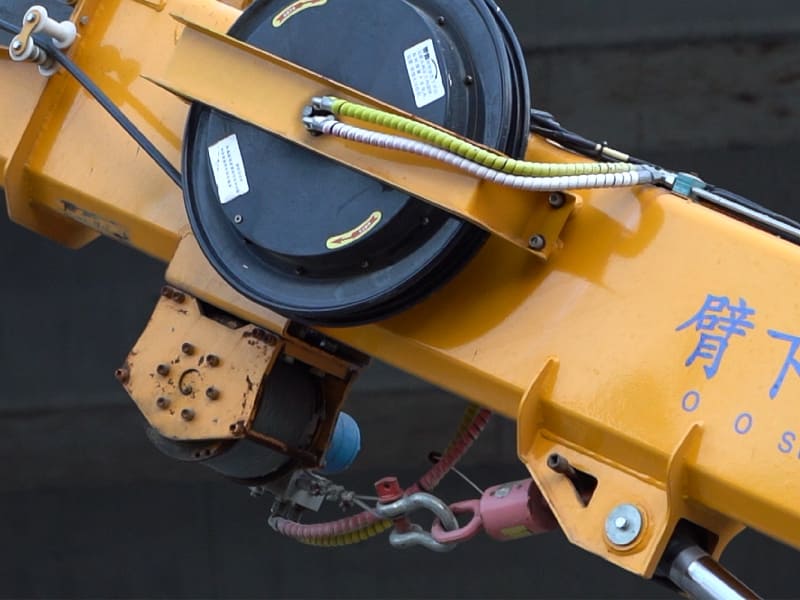
This guide explains how hydraulic planetary winches work, their applications, and the key factors to consider when choosing the right winch for aerial work platforms.
What Is a Hydraulic Winch for a Boom Lift?
A boom lift hydraulic winch is a specialized lifting device powered by the machine’s hydraulic system. It converts hydraulic energy into mechanical torque through a hydraulic motor and planetary gearbox, allowing operators to lift and lower heavy materials smoothly and safely.
Unlike recovery winches used on off-road vehicles, industrial hydraulic winches used on aerial equipment are designed for controlled lifting operations. They require:
- High torque output
- Stable speed control
- Reliable load holding
- Compact installation dimensions
- Long service life under frequent operation
On aerial work platforms, telescopic boom lifts, and bucket trucks, hydraulic winches are typically used as auxiliary lifting systems. They help transport tools, cables, spare parts, transformers, and construction materials directly to elevated work areas.
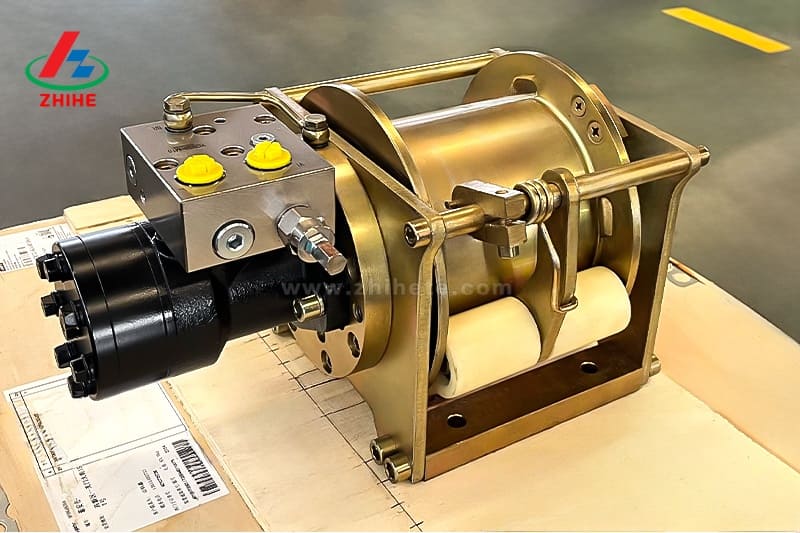
Important safety note: Hydraulic hoist winches installed on aerial platforms are generally designed for material handling only. They should never be used for lifting personnel unless the complete system has been specifically designed and certified for that purpose.
Why Hydraulic Winches Are Preferred for Aerial Work Platforms
Compared with traditional electric winches, hydraulic planetary winches offer significant advantages in heavy-duty applications.
| Feature | Hydraulic Planetary Winch | Electric Winch |
| Torque Output | High torque in compact size | Requires larger motors for similar performance |
| Duty Cycle | Suitable for continuous operation | Limited by motor overheating |
| Environmental Resistance | Excellent protection against dust, water, and outdoor conditions | Electrical components are more sensitive |
| Speed Control | Smooth proportional control | More difficult for precise positioning |
| Service Life | Long operating life with proper maintenance | Higher wear on electrical components |
For boom lifts and aerial platforms, reliability is critical. A hydraulic winch must perform consistently in outdoor environments where rain, dust, vibration, and temperature changes are common.
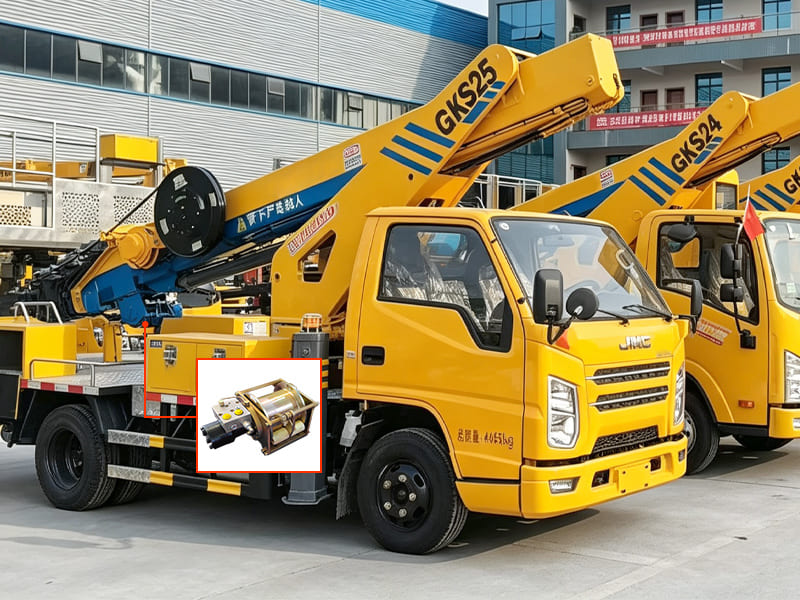
Main Components of a Hydraulic Planetary Winch
A high-performance hydraulic planetary hoist winch combines several precision-engineered components into one compact assembly.
Hydraulic Motor
The hydraulic motor converts oil pressure and flow into rotational power. A high-torque hydraulic motor provides stable performance across different lifting speeds and load conditions.
Planetary Gearbox
The planetary gearbox is the core power transmission component. Through multiple planetary gear stages, it increases torque while reducing speed, allowing the winch to lift heavy loads with a compact structure.
Compared with conventional gear systems, planetary transmission provides:
- Higher torque density
- Better load distribution
- Higher efficiency
- Reduced mechanical wear
This makes planetary winches ideal for space-limited applications such as boom lifts and bucket trucks.
Fail-Safe Brake System
Safety is one of the most important considerations in aerial equipment.
A quality hydraulic winch uses a spring-applied, hydraulically released multi-disc brake. When hydraulic pressure disappears or the control system stops, the brake automatically engages and holds the load securely.
This design helps prevent:
- Load slipping
- Unexpected drum rotation
- Accidental free fall
Winch Drum and Wire Rope System
The drum stores and guides the wire rope during operation. Precision drum design helps prevent rope overlap, excessive wear, and uneven winding.
A properly matched drum size and rope capacity are essential for safe and efficient lifting performance.
Common Applications of Hydraulic Winches on Aerial Equipment
Hydraulic winches are widely used in different industries where elevated material handling is required.
Construction and Building Maintenance
Boom lifts equipped with hydraulic winches can lift:
- Installation tools
- Steel components
- Glass panels
- Maintenance equipment
This reduces manual handling and improves productivity at height.
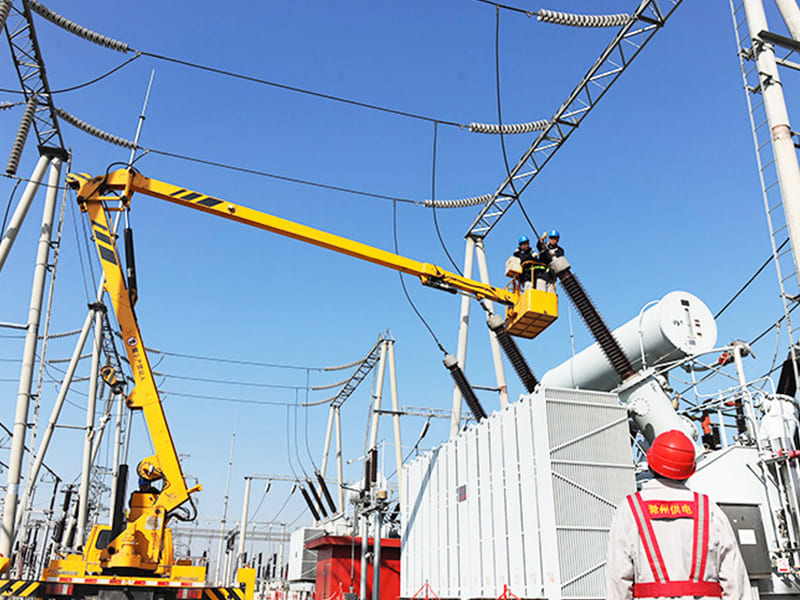
Utility and Power Line Maintenance
Bucket trucks and utility vehicles often use hydraulic winches to lift:
- Transformers
- Cable equipment
- Electrical components
- Maintenance tools
Reliable load control is especially important when working near power infrastructure.
Telecommunications
For communication tower installation and maintenance, compact hydraulic winches help move:
- Antennas
- Cables
- Mounting equipment
Bridge and Infrastructure Inspection
Special aerial platforms used for bridge inspection and municipal maintenance often require compact and reliable lifting systems.
Wind Energy Maintenance
Wind turbine service teams use hydraulic lifting systems to transport heavy tools and replacement parts during maintenance operations.
How to Select the Right Hydraulic Winch for a Boom Lift
Choosing the correct hydraulic winch requires matching mechanical requirements with the machine’s working conditions.
1. Lifting Capacity
The first step is determining the maximum load requirement.
Common capacities include:
- 500 kg
- 1000 kg
- 2000 kg
- Customized heavy-duty capacities
Always consider safety factors and actual working conditions rather than selecting a winch based only on maximum pulling force.
2. Hydraulic System Compatibility
The winch must match the aerial platform’s hydraulic system.
Important parameters include:
- Operating pressure (Bar / PSI)
- Hydraulic flow rate (L/min / GPM)
- Hydraulic motor displacement
Incorrect hydraulic matching can result in slow operation, insufficient torque, or overheating.
3. Installation Space and Mounting Design
Aerial equipment has strict space limitations.
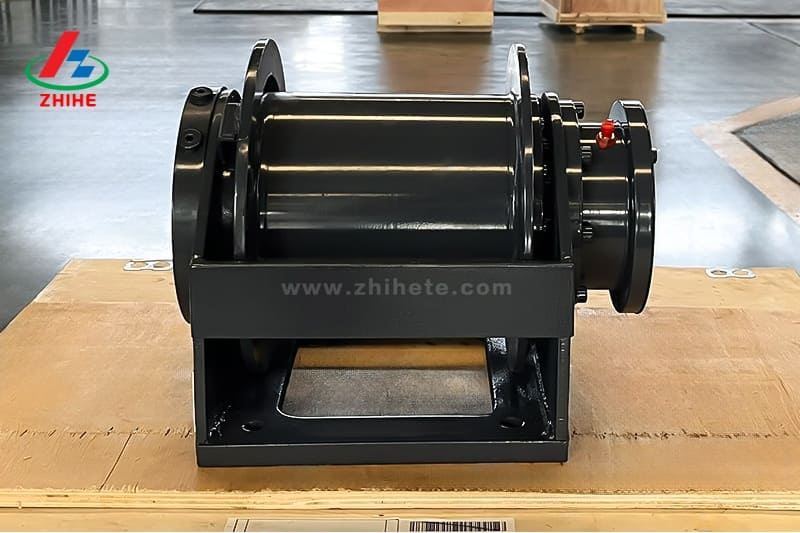
A compact planetary winch design allows the gearbox to be integrated inside or close to the drum, reducing installation space while maintaining high torque output.
Before ordering, confirm:
- Mounting dimensions
- Bolt pattern
- Hydraulic port location
4. Brake Safety and Load Holding
For aerial applications, brake performance is essential.
Choose a hydraulic winch with:
- Automatic holding brake
- Reliable static load capacity
- Stable braking performance
A high-quality braking system ensures safer operation during lifting and stopping.
5. Rope Capacity and Working Speed
The drum design must match:
- Required lifting height
- Wire rope diameter
- Working speed
- Operating frequency
A correct rope configuration improves efficiency and extends service life.
Hydraulic Winch Maintenance Tips
Regular maintenance helps prevent unexpected downtime.
Inspect Wire Rope Regularly
Check for:
- Broken wires
- Corrosion
- Deformation
- Excessive wear
Check Hydraulic Components
Inspect:
- Hydraulic hoses
- Fittings
- Oil leakage
- Hydraulic oil condition
Test Brake Performance
The brake system should be checked regularly to ensure reliable load holding.
Keep the Drum Clean
Remove dirt, sand, and debris to reduce wire rope damage and improve winding performance.
OEM Hydraulic Winch Solutions and Replacement Options
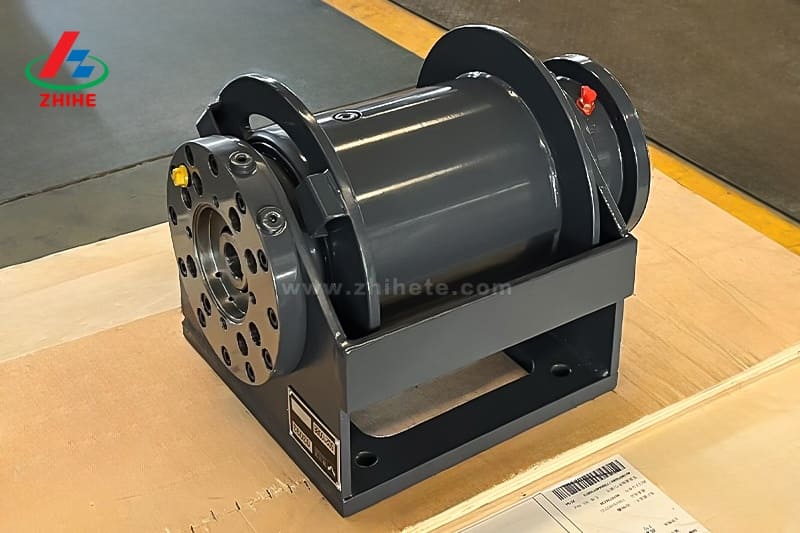
For aerial equipment manufacturers and distributors, customized hydraulic winches can provide better compatibility and performance compared with standard products.
A reliable OEM hydraulic winch solution should support:
- Customized mounting dimensions
- Different hydraulic motor options
- Adjustable gear ratios
- Customized drum sizes
- OEM replacement requirements
For replacement projects, a properly designed hydraulic winch can provide the same installation dimensions and performance characteristics as the original equipment while reducing procurement costs and lead time.
Frequently Asked Questions
Can a hydraulic winch on a boom lift lift people?
Generally, no. Standard hydraulic winches are designed for material handling. Personnel lifting requires a specially designed and certified system.
Why are planetary gear winches widely used in aerial platforms?
Planetary gear systems provide high torque, compact dimensions, smooth operation, and excellent durability, making them suitable for limited installation spaces.
Can hydraulic winches be customized for different machines?
Yes. Professional manufacturers can customize mounting structures, hydraulic specifications, drum dimensions, and gear ratios according to equipment requirements.
Conclusion
Selecting the right hydraulic winch for a boom lift requires careful consideration of lifting capacity, hydraulic compatibility, safety braking, installation space, and long-term reliability.
A well-designed hydraulic planetary hoist winch improves equipment performance, reduces maintenance requirements, and provides safer material handling in demanding aerial work environments.
As a manufacturer specializing in planetary reducers, hydraulic winches, and transmission solutions, ZHIHE Transmission provides customized hydraulic winch solutions for aerial work platforms, truck-mounted equipment, construction machinery, and other heavy-duty applications.
Whether you need an OEM hydraulic winch, a replacement solution, or a customized planetary lifting system, selecting the right transmission partner is the key to achieving reliable long-term performance.