
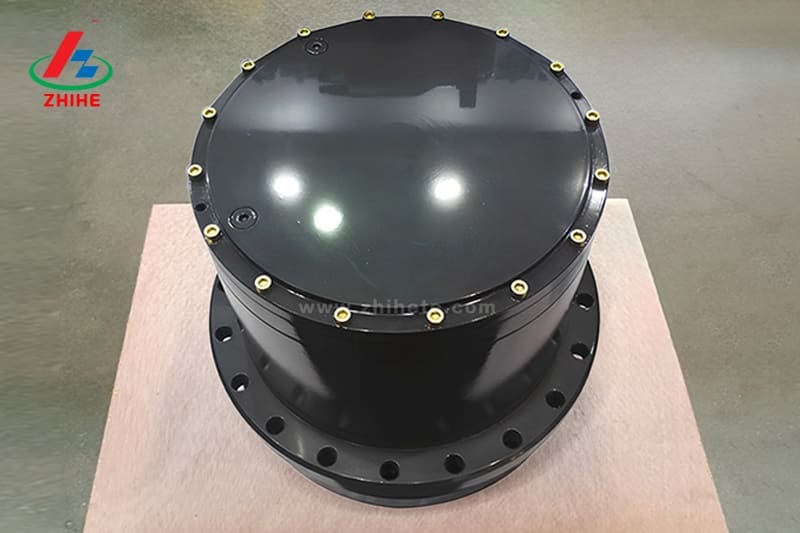
A travel reducer (also called a travel gearbox or travel drive) is a key component in heavy machinery. It takes power from a motor or hydraulic unit and converts it into a slower and stronger motion. It helps excavators, cranes, and bulldozers to move over the ground.
In any excavator, the travel reducer sits between the drive motor and the track or wheel system. It reduces speed and multiplies torque, enabling controlled motion even under heavy load.
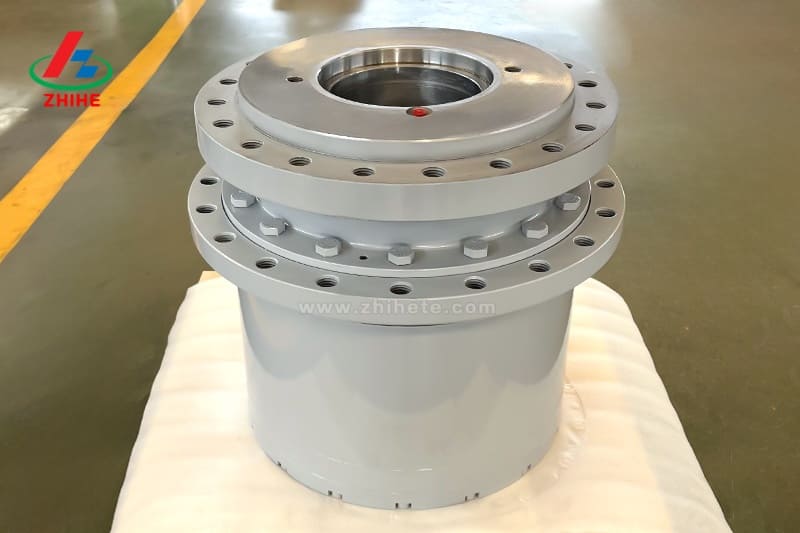
Why Travel Reducers Matter for Efficiency
- Energy Transfer & Control
- Durability & Lifespan
- Optimized Operation Under Load
How Travel Reducers Enhance Heavy Machinery Efficiency
1. Torque Conversion and Speed Reduction
A travel reducer’s main role is to convert engine torque into slower, controlled speeds. Engines and hydraulic motors rotate fast. But the heavy machinery cannot move at those speeds. The reducer slows the rotation and multiplies torque. It gives excavators, cranes, and bulldozers the power output they need to move heavy loads. This speed reduction is vital for large tracked machines and construction machinery.
2. Improving Fuel Efficiency
Travel reducers also make machines more fuel-efficient. It matches the correct gear ratio to the machine’s task. The reducers ensure the motor does not work harder than needed. Less strain on the motor means lower fuel use per hour of operation.
A planetary or worm gear system balances torque and speed to get the best output from the engine. This is important in today’s market where fuel costs are high
3. Smoother Operation and Reduced Wear
Travel reducers reduce stress on the engine and transmission. They lower speed while maintaining power. It helps limit vibration, shocks, and sudden load spikes. This smoother operation means:
- Less wear and tear on gears, shafts, and bearings.
- Lower maintenance costs, since parts last longer.
- Extended machine lifespan, protecting a company’s investment.
Types of Travel Reducers for Different Heavy Machinery
1. Planetary Travel Reducers
Planetary gear systems are the most common in heavy equipment. Their design spreads torque across multiple gears, making them compact yet powerful.
They deliver high torque in a small size. They are perfect for excavators, cranes, and track-driven machines. Planetary travel reducers are also highly durable. They handle heavy shock loads and frequent use.
2. Helical and Worm Gear Reducers
- Helical gears are valued for their smooth, quiet operation. They reduce noise while still transmitting large amounts of power. It makes them ideal for applications where operator comfort and precision matter.
- Worm gears, on the other hand, are used when high torque output is required. Their self-locking feature prevents reverse motion, adding a level of built-in safety.
At ZHIHE, travel reducers integrate worm gear technology with normally closed brakes. This ensures heavy machinery delivers torque and stops safely when needed.
3. Bevel Gear Reducers
Bevel gears are best for applications that demand high load capacity. They offer strong efficiency ratios. They are often used in larger construction and mining equipment.

How to Maintain Your Travel Reducers for Optimal Performance
Proper maintenance is what keeps your travel reducer running well for years. Skipping small checks leads to big failures. Below are key practices to follow.
1. Regular Lubrication and Fluid Checks
Lubrication is the lifeblood of any gear system. It helps reduce friction, remove heat. It also prevents metal surfaces from grinding against each other.
- Use the right lubricant
- Stick to a schedule.
- Automatic lubrication systems help tools that automatically supply lubricant at set intervals.
- Avoid over- or under-lubrication.
2. Inspecting for Wear and Tear
Even with good lubrication, parts wear over time. Regular inspections help catch problems early.
- Visual checks
- Clearance & backlash
- Bearing inspection
- Fasteners & alignment
3. Cleaning and Debris Prevention
Dirt, dust, grit, and moisture are enemies of gears and bearings. They can cut into metal and accelerate wear.
- Keep the exterior clean
- Use proper seals & breathers
- Flush or replace fluid when contaminated.
- Shield sensitive parts
- Maintain swing gearbox and swing motor
Ensure the area around the normally closed brake is sealed. Debris in the brake can affect braking action or contaminate the reducer.
4. Monitoring Temperature and Vibration
Too much heat or vibration are early warning signs of trouble. Catching these early can prevent breakdowns.
- Temperature monitoring
- Vibration analysis
- Listen and feel
Troubleshooting Common Travel Reducer Issues
No system is perfect. Even well-maintained travel reducers may show signs of trouble. Detecting issues early helps you avoid breakdowns and costly repairs.
1. Excessive Noise or Vibration
Causes
- Worn or damaged gear teeth, bearings, or shafts
- Misalignment between motor, reducer, or output shaft
- Imbalance or bent shafts leading to uneven loading
- Loose fasteners or mountings
- Inadequate lubrication (oil film broken down)
- Problems in the brake system (if normally closed brake binds or drags)
How to Address It
- Shut down operation as soon as abnormal noise or vibration is detected.
- Check alignment of motor, reducer, and driven member. Realign if off.
- Inspect gear teeth and bearings for wear, cracking, or pitting. Replace faulty parts.
- Tighten mounts, bolts, and fasteners: Loose hardware often causes vibration.
- Review lubrication: Confirm correct oil grade, level, and condition.
- Isolate the source. Use vibration sensors or stethoscope tools to trace the fault line.
- Brake check
2. Reduced Power or Slow Movement
Causes
- Low or degraded lubricant, increasing internal friction
- Internal damage: worn gears, broken teeth, or bearing failure
- Torque losses or slippage in coupling or connection
- Brake drag or partial engagement (especially in normally closed brake systems)
- Insufficient torque from motor, or mismatch of reducer capacity
Troubleshooting Steps
- Check fluid levels and condition. If lubricant is dark, milky, or contains particles, change it.
- Test motor output to ensure it gives expected torque and speed.
- Inspect internal components
- Check couplings and connections for slippage or looseness.
- Brake diagnostics
- Measure backlash and clearances — increased backlash often results from wear and reduces efficiency.
When power is reduced, the machine may drift, jerk, or struggle under load. Fixing even small faults helps restore full performance and prevents more serious damage. View a troubleshooting guide here.
3. Leaking Fluid
Causes
- Worn or damaged seals, gaskets, or O-rings
- Incorrect oil levels (too high, causing splashing and seal stress)
- Blocked vent holes or breather plugs
- Poor assembly or misalignment, causing uneven seal loading or gaps
- Cracked housing, casting flaws, or damaged mating surfaces
How to Fix It
- Locate the leak source. Visual inspection under operating conditions helps catch where fluid seeps out.
- Clean the area thoroughly before opening or repairing.
- Replace seals and gaskets where needed; choose high-quality, correct spec parts.
- Check venting: clean or replace clogged breathers so internal pressure can escape safely.
- Adjust oil level to the proper mark (neither overfilled nor underfilled).
- Inspect housing surfaces for cracks or damage; repair or replace as needed.
- After repair, test under light load and recheck for leaks before full operation.
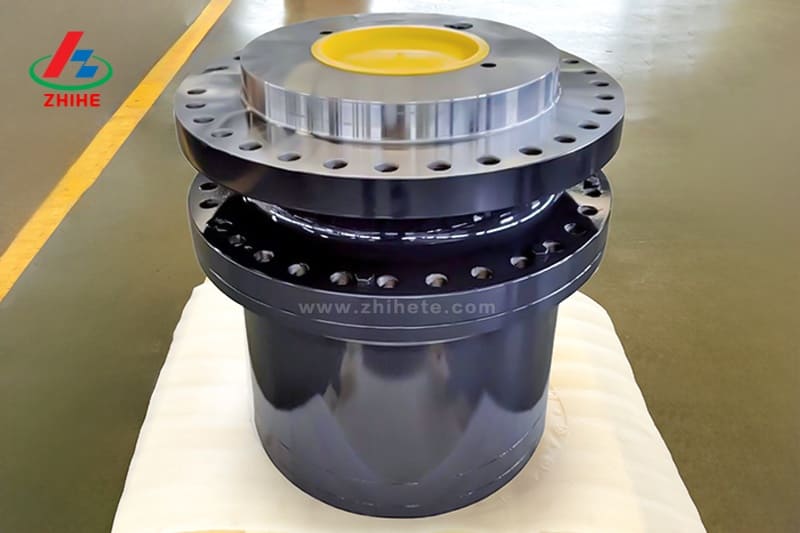
How to Select the Right Travel Reducer for Your Equipment
Choosing the correct travel reducer is key. Pick one poorly matched, and you’ll face inefficiency, breakdowns, or underperformance. Below are the main factors to weigh.
1. Matching the Reducer to the Machinery’s Specifications
To select a travel reducer that truly fits, you must begin with the machine’s specs:
- Load, weight, and duty cycle: What is the machine carrying? How frequently? Is it in heavy continuous work or intermittent use?
- Torque & speed requirements. Based on motor or hydraulic drive specs, what torque and speed do you need at the output side? Use manufacturer curves.
- Gear ratio: The ratio you need (say 20:1, 50:1, etc.) depends on how much speed reduction is required. Suppliers list gear ratios for their models.
- Mounting, shaft orientation & space constraints. Coaxial, parallel, or right-angle configurations matter depending on machine layout.
- Environmental conditions. If the machine works in harsh or dusty sites, that influences sealing.
Also, always refer to the OEM’s recommendations for reducers (if available). Many machinery brands publish matching reducer models or acceptable ranges. Use that as a starting reference, then adjust for your own design or upgrade needs.
2. OEM vs Aftermarket Travel Reducers
OEM reducers Pros:
- Typically tested and validated for your specific machine model
- Precise compatibility and better assurance of fit
- Likely to come with better warranty or parts matching
Cons:
- Often more expensive
- Longer lead times or limited supply
Aftermarket reducers Pros:
- More options & flexibility
- Often lower cost or quicker availability
- Possible to customize for certain features (e.g. brake torque, special gear materials)
Cons:
- Quality varies widely — you must vet the supplier
- Compatibility risk: mounting, backlash, durability
- Warranty and support may be weaker
3. Key Features to Consider
Once you narrow options, check these specific features. These can make or break performance and longevity:
- Gear ratio options & flexibility
- Torque capacity & safety margins
- Backlash & precision — lower backlash gives more control, but often costs more.
- Size, weight & packaging — match the space you have. A reducer that is too large or heavy might impose structural stress.
- Efficiency & losses
- Thermal management
- Material & hardness of gears
- Sealing & lubrication features
- Brake integration
Balancing cost with long-term value is essential. A cheaper unit with poor braking or weak sealing can cost far more in downtime and maintenance in the long run.
Conclusion
A travel reducer is more than just a gearbox. It is the part that allows heavy machinery to move with control, safety, and efficiency. The right reducer lowers operating costs and extends the life of equipment.
Each type has its place. Whether its planetary designs for compact power. Or worm gear systems with normally closed brakes.
Explore Best Travel Reducers
ZHIHEIntelligent Equipment specializes in building reducers that combine durability, efficiency, and safety. We design planetary and worm gear travel reducers equipped with normally closed brakes. It meets the needs of excavators, cranes, bulldozers, and more.